

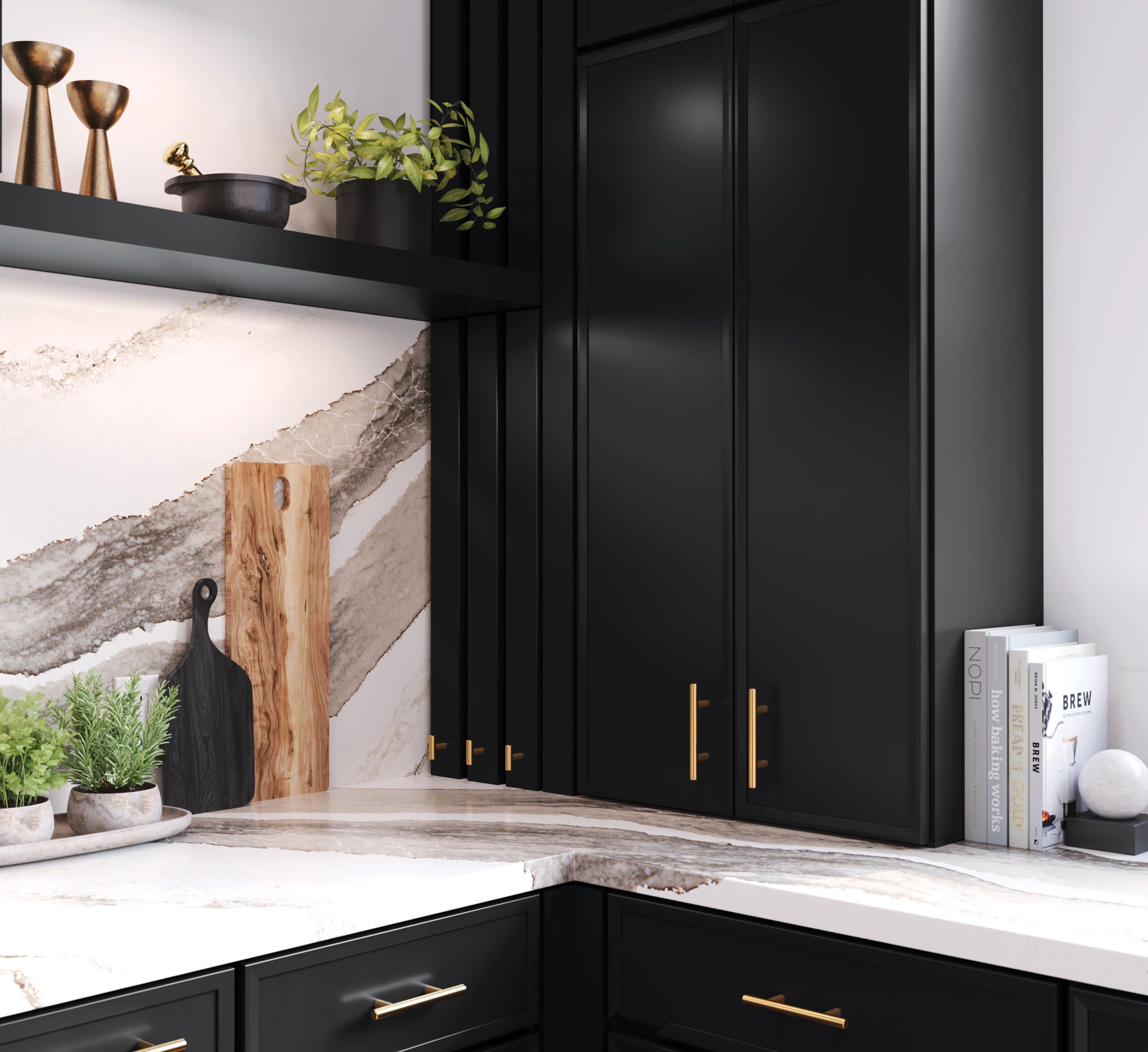
For years, matching every finish in the kitchen was treated as the safe choice. Today, mixing metals is one of the most popular ways to add warmth, depth, and a collected-over-time character to a space. Done well, a blend of finishes looks intentional and layered. Done carelessly, it can feel scattered and unfinished. The good news is that a cohesive mixed-metal kitchen comes down to a few simple principles, not luck.
At Generation Floors, we help homeowners bring these details together during full kitchen and bathroom remodeling projects, so we have seen firsthand what separates a busy kitchen from a beautifully balanced one.
Why mixing metals actually works
A single finish repeated across every surface can read as flat, especially in a larger kitchen. Combining two or three metals introduces contrast that draws the eye and gives the room dimension. It also lets you honor different elements of the space, such as a statement faucet, vintage-inspired pulls, or modern pendant lighting, without forcing everything into one uniform look.
The key word is intentional. Mixed metals should feel like a decision, not an accident. That intention starts with choosing a lead finish.
Start with one dominant metal
Before you pick a second or third finish, choose the metal that will carry the room. This dominant finish should appear most often, giving your eye a consistent thread to follow.
A helpful ratio to keep in mind:
Roughly 70 percent of your metal elements share one dominant finish
The remaining 30 percent introduce one or two accent metals
Your dominant metal is usually the one on the largest or most-used features, such as cabinet hardware or the faucet. Once that anchor is set, every accent you add has something to relate back to, which is what keeps the look grounded.
Choose finishes that flatter each other
Not every pairing lands. The most cohesive combinations play with undertone and contrast rather than fighting it.
Pair a warm metal with a cool one
Warm metals include brass, gold, copper, and bronze. Cool metals include chrome, polished nickel, and stainless steel. Pairing one from each family creates a natural balance, where the warmth softens the cool tones and the cool tones keep the warmth from feeling heavy.
Combinations that rarely miss
If you want a reliable starting point, these pairings tend to look polished in almost any kitchen:
Matte black and brass for a modern, high-contrast look
Polished nickel and warm brass for a timeless, transitional feel
Chrome and gold for a bright, clean, slightly glamorous mix
Oil-rubbed bronze and brushed gold for a cozy, layered warmth
Stainless steel and matte black for an easy, understated combination
Sticking with one warm and one cool finish is the simplest way to keep things intentional without overthinking it.
Give each metal a job
The fastest way to make a kitchen feel busy is to scatter finishes randomly. Instead, assign each metal a clear role so the placement feels purposeful.
A few ways to divide the work:
Cabinet hardware in your dominant finish, since pulls and knobs repeat throughout the room
Faucet and sink fixtures in either the dominant finish or a single accent, kept consistent with each other
Lighting and pendants as a chance to introduce your accent metal
Range hood or open shelving brackets as supporting features that echo one of your chosen finishes
When each element has a defined place, the eye reads the space as coordinated rather than cluttered.
Keep the look cohesive, not chaotic
A handful of guardrails will keep your mix feeling calm and considered:
Limit yourself to two finishes, three at most. Beyond that, cohesion gets difficult.
Repeat each metal at least twice. A lone finish that appears once looks like a mistake, while a repeated finish looks like a plan.
Match undertones within each family. Two warm metals should both lean warm, not one golden and one rosy.
Consider sheen, not just color. A room full of high-polish finishes can feel busy, so balance shine with matte or brushed textures.
Space your finishes apart. Placing your two boldest metals side by side can create visual tension, so let them breathe across the room.
Coordinate hardware with your countertops and surfaces
Cabinet hardware never lives in isolation. It sits against countertops, backsplashes, and flooring, and those surfaces influence which metals feel right.
Cool-toned natural stone with gray veining often pairs beautifully with polished nickel or chrome, while warmer stones and creamy tile backsplashes tend to flatter brass and gold. If you are still shaping the overall palette, the visualize your kitchen tool makes it easier to preview how hardware, surfaces, and cabinetry work together before you commit.
For more ideas on pulling a full room together, the inspiration gallery and completed projects are a great place to see mixed finishes in real kitchens.
Common mistakes to avoid
Even a great pairing can go sideways with a few missteps. Watch out for these:
Using too many finishes and losing the sense of intention
Introducing a finish only once, which reads as an oversight
Ignoring surrounding materials like countertops, flooring, and backsplash undertones
Mismatching hardware sheen across cabinets in the same run
Forgetting fixtures, so the faucet or lighting clashes instead of complementing
Avoiding these keeps the mix looking deliberate from every angle.
Bring your kitchen vision to life
Mixing metals is one of the easiest ways to give your kitchen personality, and it is even easier with a team who has coordinated these details across decades of remodels. Our flooring experts can help you balance hardware, countertops, cabinets, and flooring into one cohesive design that feels warm and finished.
Ready to plan your space? Here is how our team can help:
Schedule a free estimate to talk through your kitchen goals
Book our dedicated kitchen and bath estimate for full remodeling projects
Let our shop-at-home service bring samples and expertise right to your door
Reach out to Generation Floors today, and let our team help you create a kitchen that feels beautifully put together, hardware and all.


